
Consultations to create a global Feminist Playbook – organized by Women Deliver and its vast network of partners – are responding to growing political pressure on gender equality and human rights, with feminist leaders, movements and communities across regions describing the process as timely and urgently needed.
Since the first consultations on the margins the United Nations General Assembly (UNGA) in September 2025, Women Deliver and partners have convened 15 multistakeholder consultations across Mexico, Nairobi, Beirut, Bogotá, Paris, Kathmandu and Geneva, alongside additional bilateral discussions at global forums including COP, CSW and the International Conference on Family Planning (ICFP).
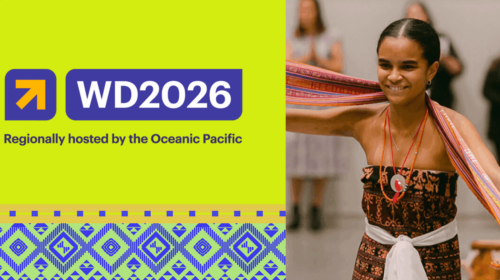
Further consultations are planned through 2026, ahead of the Playbook’s launch at the Women Deliver 2026 Conference (WD2026) in Narrm (Melbourne) in April. The Playbook is being developed as a shared vision for the gender equality and for a world free of discrimination, as well as a global effort to support closer collaboration across movements and to press for real accountability from those in power.
Consultations have surfaced a shared direction, one that directly challenges colonial power structures and calls for justice at the center of feminist action.
“What we are hearing most strongly is that this is a timely effort in the face of ongoing global threats, and that there is a real need for us to get organised as a gender equality, justice and human rights sector. There is a clear call to organise around solidarity, accountability and intersectionality.” said Paola Salwan Daher, Women Deliver’s Senior Director of Collective Action.
“Global economic systems are undermining gender justice and the structures that were supposed to fund and uphold gender and social justice are failing the very movements they depend on. Economic justice is consistently identified as a priority, and there is a strong emphasis on intersectionality, so that discriminatory systems and power dynamics are broken away from and more just ones are built,” she said.
Perspectives from the global majority are playing a critical role in shaping the Playbook, with repeated discussions of how colonialism, capitalism and donor dynamics continue to shape and constrain movements. A central theme has been the need to challenge outdated international development model s, and to re-imagine how movements are resourced and supported.
“There are strong calls to re-imagine models of self-reliance, including decolonizing donor–grantee relationships, mitigating power imbalances, and learning from feminist funds that are already reshaping philanthropy through trust-based and collaborative approaches,” said Paola.
Younger feminists and adolescent girls are also reshaping the conversations, bringing clarity, urgency and non-negotiable demands to the table.
“Young feminists and adolescent girls have always been part of feminist movements and have carved out space for themselves within the broader global feminist conversation. Their priorities are captured in the Girls Manifesto, drafted by young feminists themselves, calling for an end to extractive, age-based participation models that treat adolescent girls as symbols rather than political actors,” she said.
While many participants are confronting rising authoritarianism and the unravelling of long-standing systems, the co-creation process itself has emerged as a source of hope and momentum. “The future we want begins with the vision we share, the very act of coming together is an act of joyful resistance,” concluded Paola.
The Feminist Playbook will be launched at the Women Deliver 2026 (WD2026) Conference in Narrm (Melbourne), marking a major collective moment for global feminist organising. It will outline a feminist vision for action: a unifying roadmap toward gender equality, rooted in care, solidarity, and intersectional justice. The shared commitment of all involved will be expressed through concrete pledges and real, actionable steps toward change.
Registrations are now open for WD2026. For more information visit womendeliver.org/wd2026