



Progress on gender equality is under threat and could be reversed without urgent action, global leaders warned at the Women Deliver 2026 Conference in Narrm (Melbourne).
As overlapping crises and a growing anti-rights backlash intensify, speakers said that the systems meant to deliver gender equality are no longer working for those most affected, setting the stage for the Melbourne Declaration for Gender Equality.
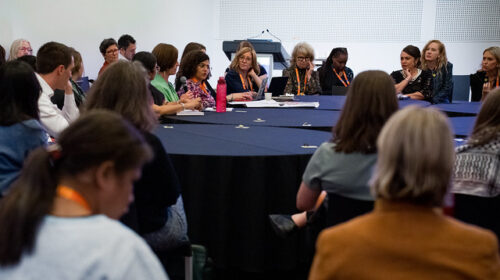
Bringing together 6,000 delegates from over 189 countries, the Conference has become a focal point for global leaders, advocates, and policymakers navigating a rapidly shifting landscape for gender equality.
Australia’s Minister for Women, Senator the Hon Katy Gallagher, opened by reflecting on her path into politics, shaped by years of civil society activism and advocacy for equality.
She said gender equality is now firmly positioned at the center of decision-making. “We are taking a whole of government action, whether it be in workplace relations, access to justice, in economic policy, and in social services, in education, health, and housing,” said Senator Gallagher.
Ahead of the 2026–27 Budget, Senator Gallagher pointed to structural reforms introduced in the Government’s first term, including gender-responsive budgeting, requiring policies to be tested for their impact on women before decisions are made.
“Women are the backbone of the care economy, yet they were amongst the lowest paid in Australia. This is not right.” She said the Government has funded significant wage increases in the care sector to begin properly valuing that work.
“We are closing the gender pay gap, and we now publish the gender pay gaps of large employers and are making them set targets to reach gender equality, and meet them.”
But she warned that progress cannot be taken for granted.
“When it comes to gender equality, progress is not linear and progress made today can be unwound back tomorrow. It is achieved when women make the fight for equality impossible to ignore. It is achieved when governments choose to act, to embed and entrench reform that deliver for women, and make our communities and economies stronger for everybody,” said Senator Gallagher.
Speakers at WD2026 cautioned that gains in countries like Australia risk masking a far more fragile global reality, where intersecting crises, from climate change and conflict to economic instability, are placing increasing pressure on women and girls.
Many of the systems intended to deliver gender equality are not reaching those most affected, and in some cases are reinforcing the very inequalities they seek to address. That reality is particularly evident for First Nations communities, where leaders pointed to the ongoing impact of structural inequities shaped by colonization.
Sue-Anne Hunter, Australia’s inaugural National Commissioner for Aboriginal and Torres Strait Islander Children and Young People, pointed to the persistence of systems that continue to disadvantage Indigenous communities.
“These systems have not changed. They are created to remove our children from their families so they actually work exactly the way they are intended to do.”
Her remarks emphasized the broader call from speakers to center the voices and leadership of those most affected, and to design solutions grounded in lived experience and community leadership.
The discussions come ahead of the launch of the Melbourne Declaration for Gender Equality, which was launched at the start of the Conference.
“The Melbourne Declaration is a shared commitment to rebuild a gender equality ecosystem too often shaped by donor priorities and weak accountability to people, and to root what comes next in human rights, solidarity, and the leadership of those most affected by injustice,” said Women Deliver CEO Maliha Khan
As the Conference moves toward its final days, attention is turning to what comes next and whether governments and institutions are prepared to act on the calls for change emerging from one of the world’s largest gatherings for gender equality.